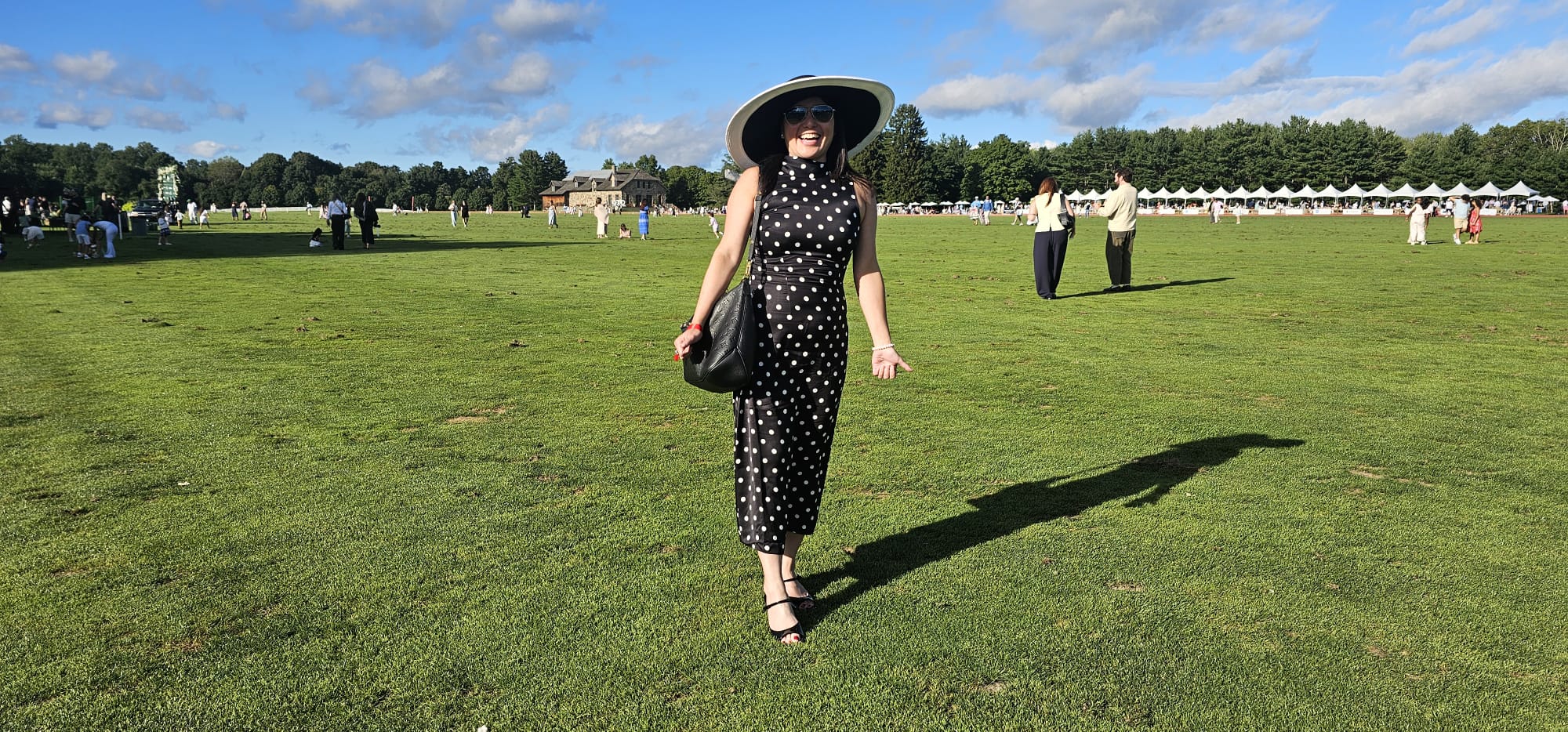
Heading to the Greenwich Polo Club is always a treat! For many years, I have hosted an event here. Seeing the gorgeous grounds in the backcountry of Fairfield County, Connecticut feels like being in a movie. Watching a match is exciting, and Prince Harry even has played at this venue!
In this version of polo, four players on two teams use wooden mallets to score goals. Each player has about 10 horses available during the match for this high energy game. The polo horses can run as high as 40 mph. The field is 300 by 160 yards – about three times the size of a standard football field. Games consist of periods called chukkers, each which is about 7 to 7.5 minutes, and a match has six chukkers, making it 90 minutes a match. After every goal, the teams switch sides.
Sports are a unique American phenomenon for college admissions. No other country in the world relies on sports to the extent the United States does to create a pipeline to their universities. American colleges realized that winning teams could create a marketing tool to encourage donors and prestige. NCAA Name, Image, and Likeness policy allow student-athletes to receive monetary payment for their brand without losing the chance to play. Football and men’s basketball are the most profitable sports for universities.
The most competitive level of college sports is Division I; there are over 350 schools with this designation. Division I college equestrian polo for men have teams at universities including Stanford, Cornell, Texas A&M University, Southern Methodist University, University of Virginia, and University of Connecticut.
For example, recruited athletes for Harvard with the highest or second highest academic rating by admission officers were accepted at rates of about 83 percent compared to 16 percent for non-athletes, while Harvard’s overall acceptance rate was at 4.6 percent back in 2018: https://www.thecrimson.com/article/2018/6/30/athlete-admissions If you have a talent for athletics, cultivating this for colleges can be advantageous for your odds.